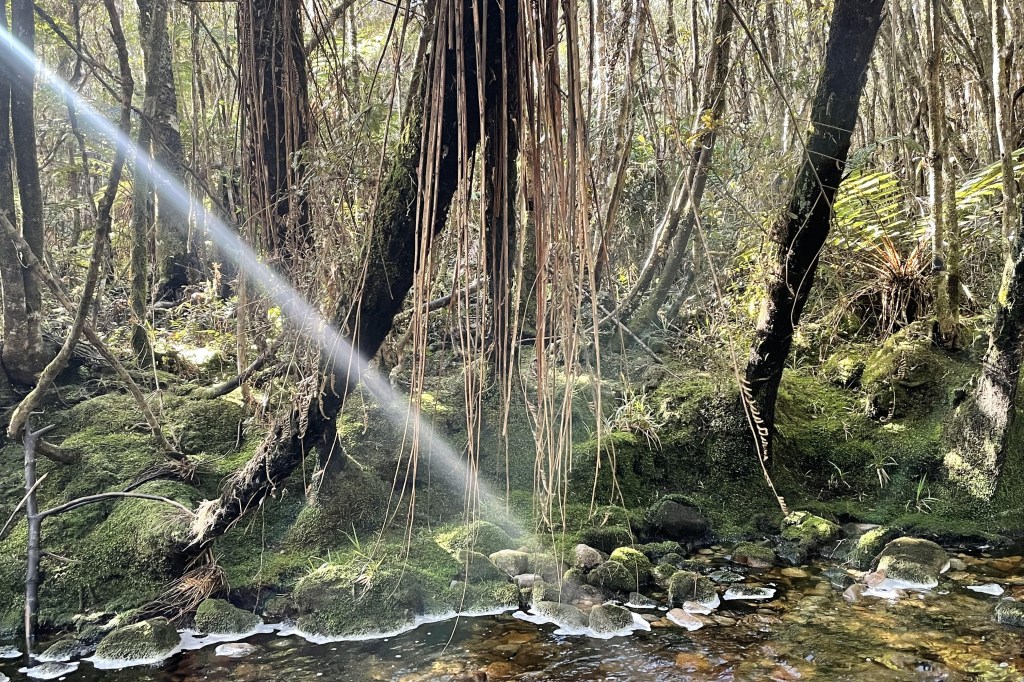
We pretty much take water for granted in our everyday life. It lives at the end of the tap and we turn it on and off at will. On the West Coast water is plentiful with an average rainfall of 3000mm to 6000mm each year. The bush block we bought is covered in rain forest with a creek running along one boundary. However, we soon learnt water being plentiful and also being accessible for everyday use are two different things.
Early on we identified three main utilities we would require to live comfortably on the land – water, power and sewerage. They all cost money to establish and we knew we needed to prioritize what infrastructure to build first. After some discussion we agreed the first utility to focus on was capturing rainwater.
While we continued to bring our drinking water over with us we were motivated by the idea of one day (soon) being able to shower, or at least bathe, in rain water to freshen up at the end of the day. This water source would also be used for washing the dishes and general cleaning.
The financial outlay involved buying a water tank and rain harvesting set up from the local hardware store. We bought a new water tank and the total cost was around $1000 NZD ($580 USD).
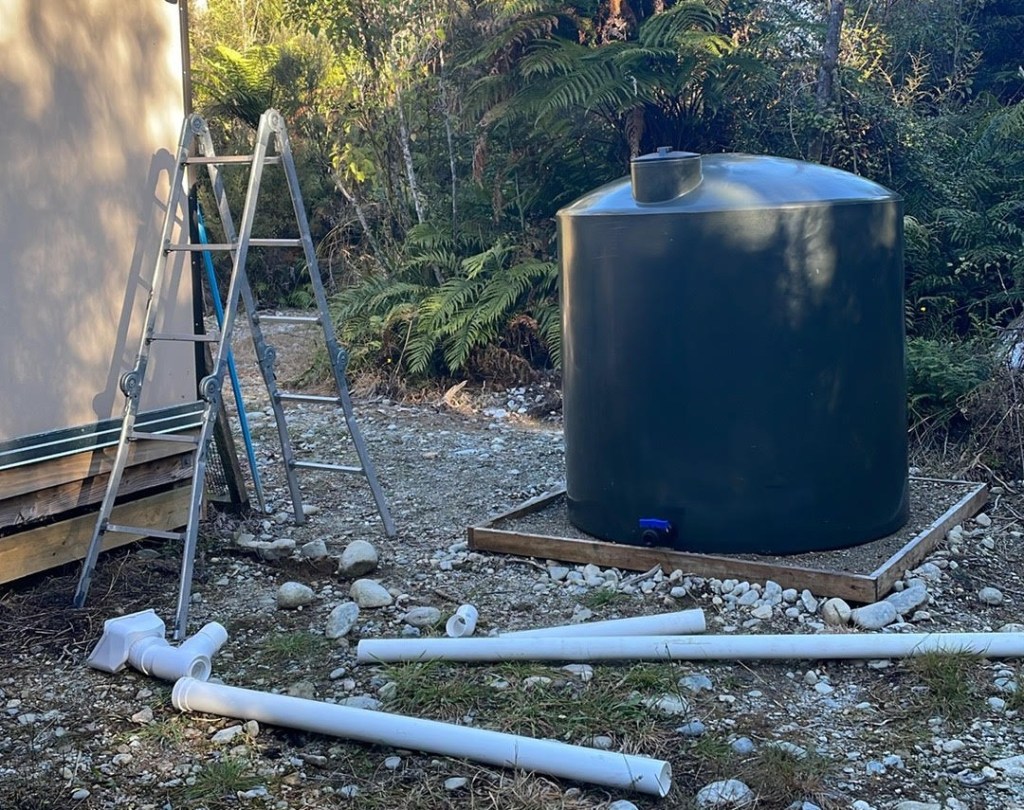
The first decision was what size tank to buy. We were restricted by the height of the Shut, needing to ensure rainwater was able to flow down off the roof into the tank. Other factors to consider were: how much water do two people need for weekend stays, how fast would the water refill between visits, and do we need to store water for when we stay longer periods, especially over summer?
After numerous hours of non-scientific discussion and a few cheeky reds, we opted to go reasonably big and purchased a 1800L tank that was 1380mm high and 1330mm wide. I was motivated to buy a larger tank to accommodate guilt-free time relaxing in a bath star-gazing after a day of working on the land. The last thing I wanted was the water police going into rationing mode if the weather forecast looked good. The colour was also a hot topic of conversation as it had to match, hence the forest green hue chosen. Not a difficult decision.
Mike boxed up a foundation and we he gave the roof a scrub down. Then we rolled the tank into place, and hooked up the rain harvesting pipes. These included a catcher at the top with a filter and a reasonably long first flush to stop any debris from the roof flowing into the tank at the start of each rainfall. A tap was also glued into the outlet at the bottom.
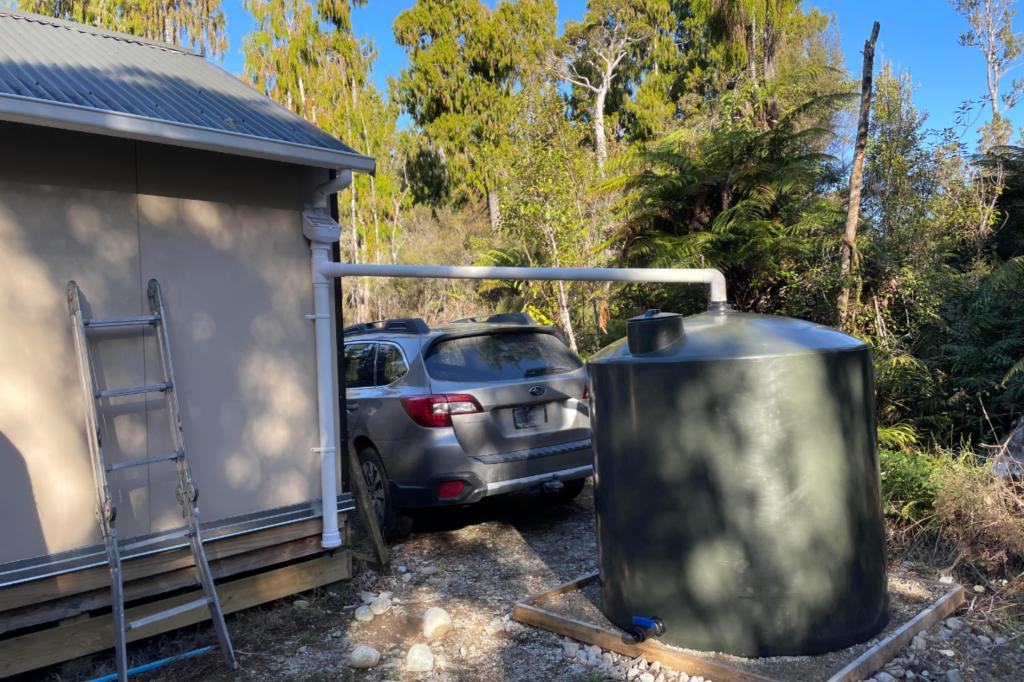
We left the Shut and headed home hopeful that when we returned in a couple of weeks time there would be water waiting for us.
Imagine our joy when we returned to find the tank full to overflowing. Success!
Since harvesting rainwater we have never had an issue running out of water. In fact, we barely make a dent in this supply on our three day visits.
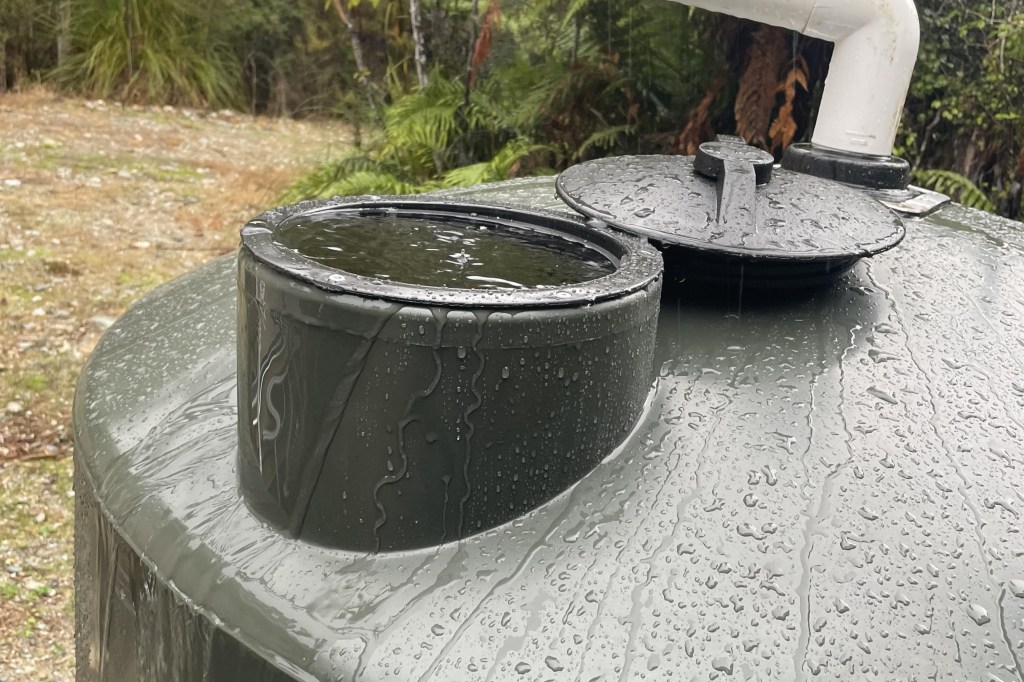
This one project gave us an immense sense of satisfaction; we were on our way to creating a sustainable lifestyle. In hindsight the tank was probably bigger than we needed based on the water usage of two people visiting for two to three nights once a month, and the generous rainfall. I imagine when we stay here for longer periods it will be useful to have the excess water storage. Besides, we are future proofing. Hopefully, one day we will be spending longer periods of time on the land and will need more water. Plus, I am committed to installing a wood fired bath at some stage and will make good use of this abundant and renewable resource.
Next, on the water agenda is setting up a shower. However, we are going to park this job for a while because winter is just around the corner. If we want to visit over the winter months we need some way of keeping warm. The Shut is constructed of 40mm metal poly panels that I swear were designed to conduct the cold. It will be too chilly to sleep in the Shut over winter without heating, and when living off-grid the most efficient approach to heating is with fire.
 Rimu & Rain
Leave a comment