At around $250 per night a Beachfront Motel room in Hokitika was a luxury we couldn’t afford to repeat too often. On top of this was the added cost of petrol driving too and from the land and our hospitality expenses staying in Hokitika with its abundance of good restaurants, pubs and cafes.
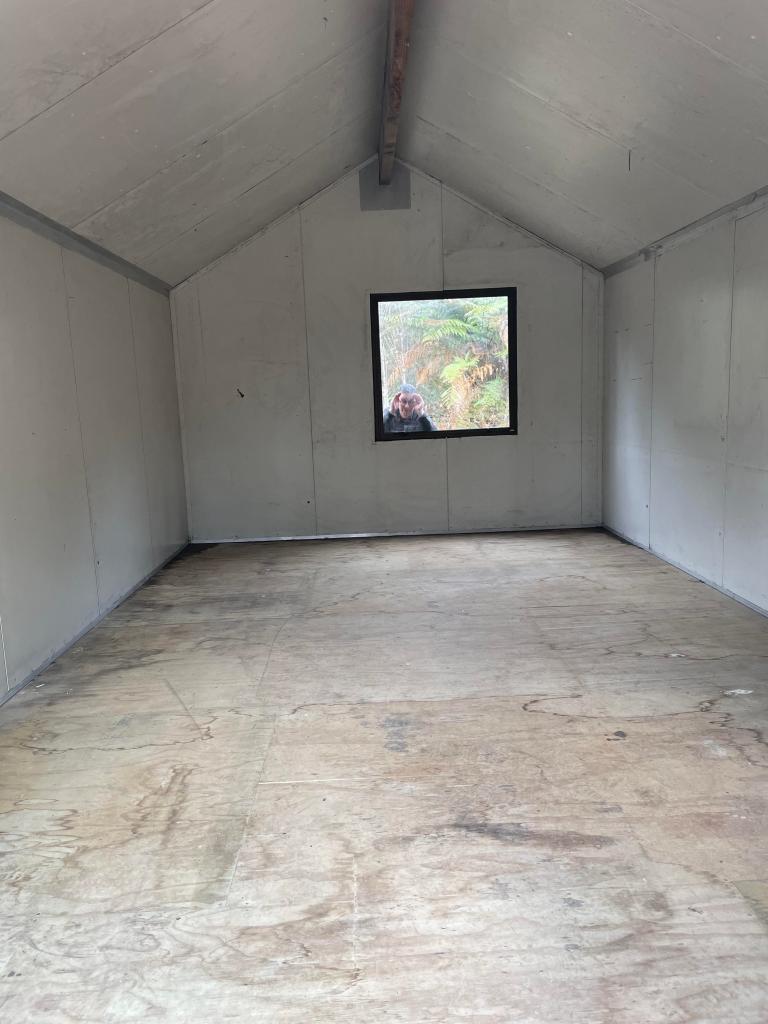
The realisation dawned on us fairly quickly that if we wanted to stay on the land and live the ‘cabin in the bush’ dream then our best option was to stay in the Shut. It didn’t look any more inviting with all the furniture removed but it smelt better, less musty, and we felt confident it was a little more water tight with the recent improvements.
The first job was to clean the walls and roof as best we could. Unfortunately, this didn’t appear to make a huge difference. It remained an ugly space but it was a roof over our heads. We couldn’t afford to buy any other structure to put on the land so we had to make do with what we had.
Accepting the Shut as our new home on the land required a shift in mindset. We had to let go of our conditioned way of thinking. The need for things to look a certain way and meet a particular standard. Pragmatically, we realised at the end of the day the aesthetics of the Shut did not impact its functionality as a shelter.
After the clean up we decided the next thing required was a bed, somewhere to sleep. Husband Mike bought some timber and made up a queen sized bed frame in the garage at home before dismantling it into kitset form to be reassembled in the Shut. We purchased an Emma mattress online that came packaged in a box and was easy to transport in the back of our Subaru Outback along with the timber framing.
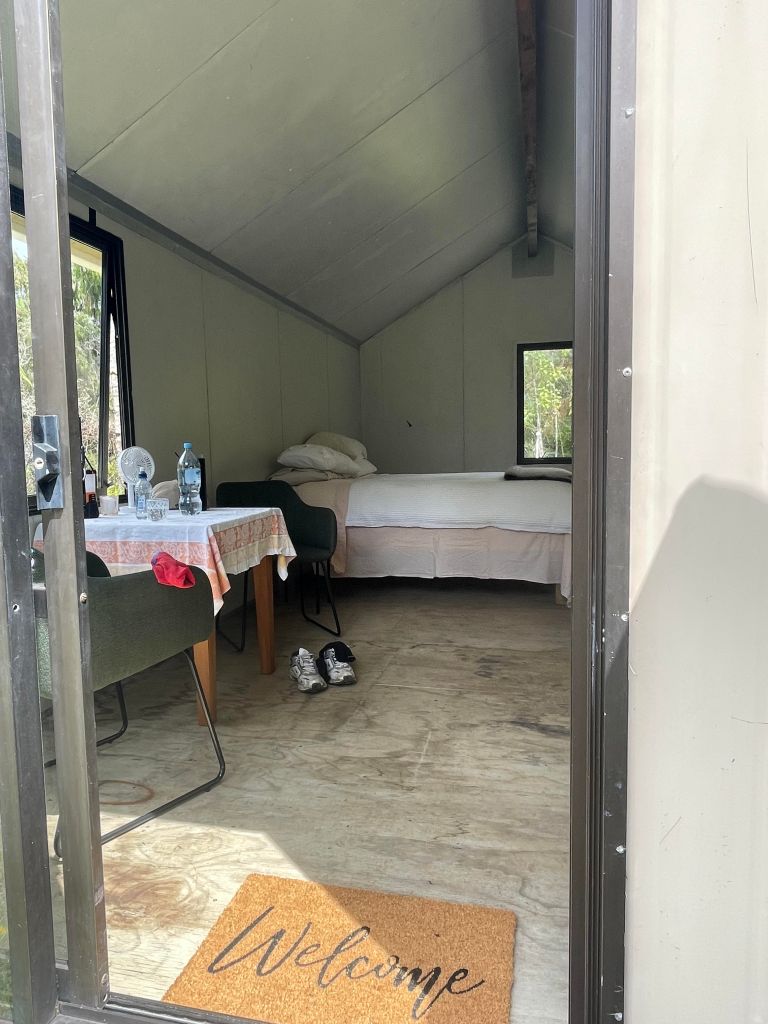
Once the bed was assembled, we added an old rimu table that had sat in the garage for years and a couple of chairs we were gifted by our daughter. The Shut was starting to feel a little more homely. However, this was just the start of its metamorphosis, there was a long way to go.
There were no services to the land. It was completely off-grid. Although, we did have cell phone reception which was a bonus. If you are wondering about sewerage, at this stage we bought ourselves a bucket toilet from the camping shop and found a saw mill down the road that was happy to give away free sawdust.
We transported our drinking water over in recycled plastic bottles. We had no water source for washing other than the creek, it was beautifully clear but the tannins from organic matter upstream stained the water a rusty brown. It was fine to dip in for a quick wash but we weren’t going to drink it without further testing.
This was living at its most basic. A new experience for us forgoing the comforts we had become accustomed too in modern day life. It was somehow liberating, living the life of our pioneering ancestors. Creating something new from nothing. From here on it felt like every improvement we made, or piece of infrastructure we installed, was a ‘game changer’. This journey was hugely satisfying.
Our decision making was always premised on answering the following two questions: what will make the biggest difference next and can we afford it?
 Rimu & Rain
Leave a comment